How to Get the Best Performance From Your VRC
Two of the best reasons for using a vertical reciprocating conveyor (VRC) over other types of material lifting equipment are
SIMPLE, COST-EFFECTIVE 2 LEVEL LIFTING
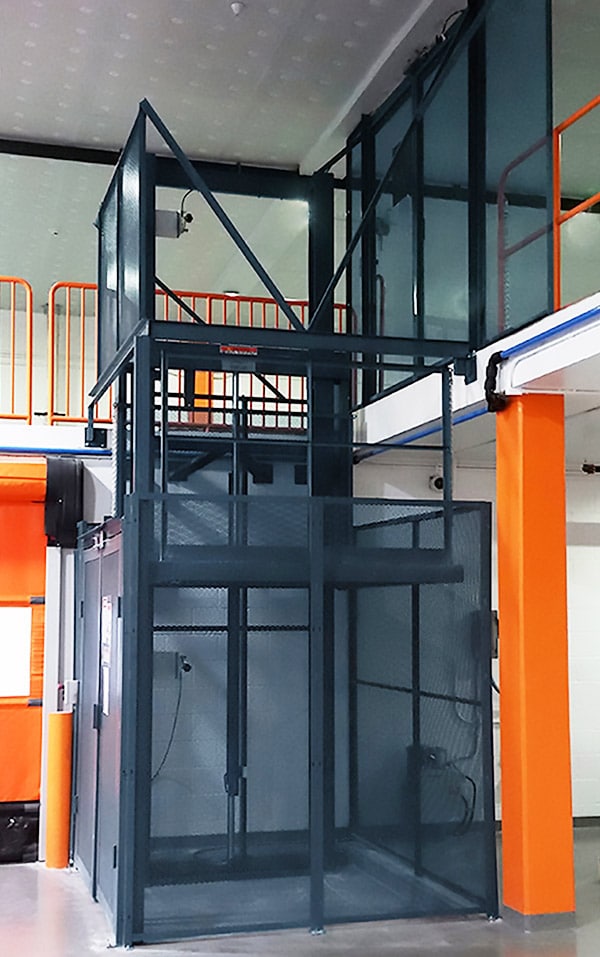
The 2-post D Series vertical reciprocating conveyor (VRC) from PFlow Industries lifts loads of up to 3,000 lbs and has an innovative design that ensures highly stable loading and unloading.
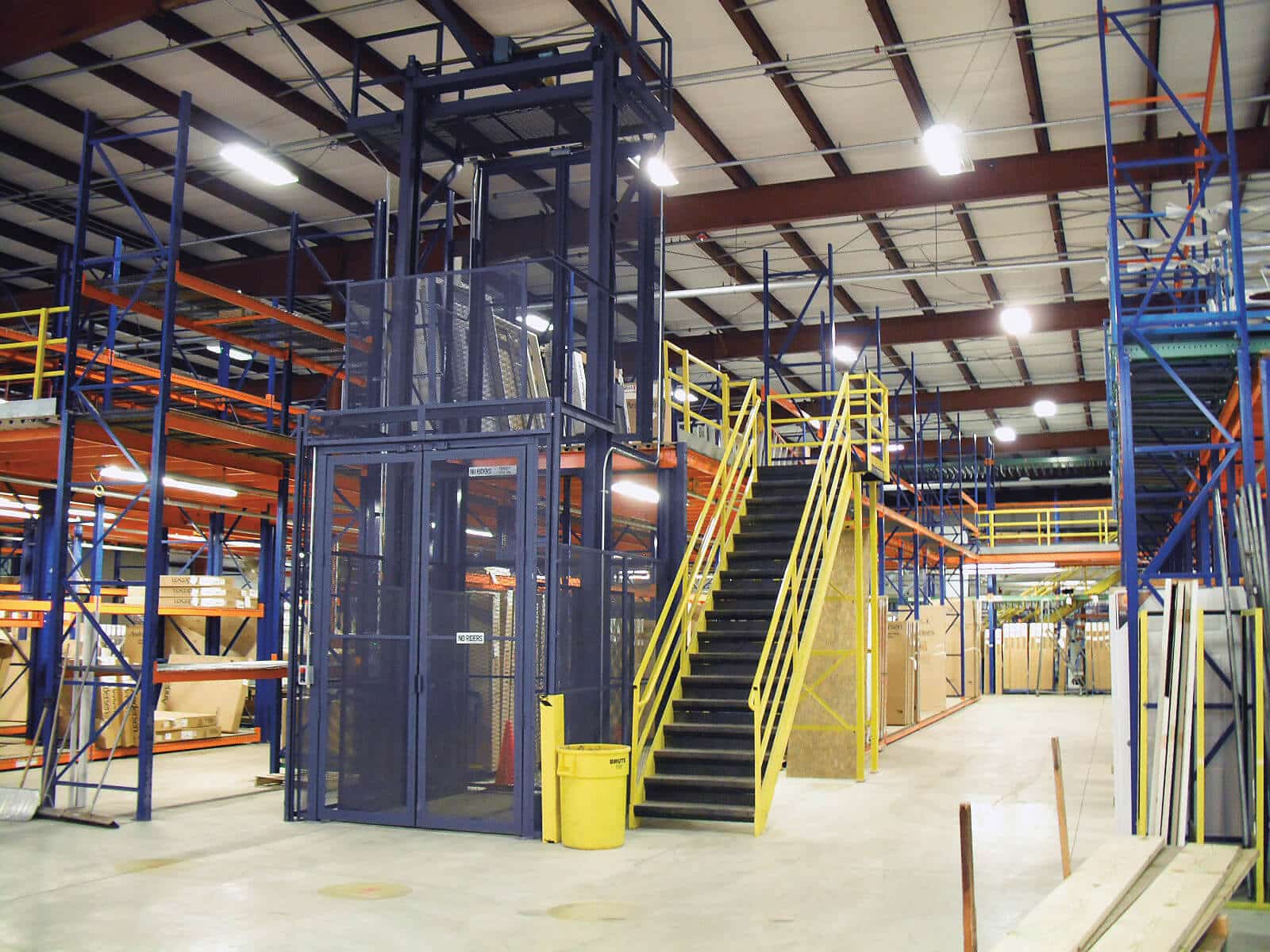
D Series hydraulic VRCs are low-maintenance and are ideal for lifting a variety of loads, including pallet loads, to mezzanines and balconies.
This hydraulic materials lift has a carriage size of up to 6’ wide by 6’ long, large enough for pallets, and a vertical rise of up to 15’. It is suitable for indoor or outdoor use, and can reach two levels.
D Series VRC Overview
Advanced safety features built into each D Series VRC
Safely moving pallets, boxes, and loads to a second level, up to 15’ in height. Ideal for both indoor and outdoor use.
Lift loads of up to 3,000 lbs, based on carriage size
Carriage size up to 6’ x 6’
The standard travel speed is 17 FPM, with speeds up to 25 FPM available
10 cycles per hour, 100 cycles per day
Safety codes (ASME B20.1) require interlocked gates with enclosures on all sides of the lift. Enclosures must be a minimum of 8’ high and reject a ball 2” in diameter.
Standard power requirements are 208/230/460VAC, 3-phase (single-phase available)
“The lift was installed and fully tested in only three days. We prefer to work with PFlow because they are the industry leader and there are never any surprises when the lift components arrive on site.”
– PJ Laviola, General Manager for Special Applications, Delaware Elevator
PFlow has been instrumental in helping shape the codes that govern the safety of vertical lift conveyors. We are confident that our VRCs will meet or exceed the code requirements in all 50 states; we offer a Code Guarantee on every quote. No PFlow unit has ever been shut down due to non-compliance with codes.
Like all powered machinery, hydraulic lifts require regular maintenance to keep them in good working condition while extending their service life. Maintenance tasks include regular daily, weekly, and monthly visual inspections. Read more about 5 tips for maintaining your hydraulic lift.

Two of the best reasons for using a vertical reciprocating conveyor (VRC) over other types of material lifting equipment are

Accidents or near misses? Materials piling up at a pinch point or getting damaged during transfer? Mounting maintenance or repair
When it comes to moving material loads between floor levels, not all solutions are created equal. While forklifts, inclined conveyors,